
SPECTRA Blog / Home Intelligence
What Is Home Intelligence?
Smart homes let you control your environment. Intelligent homes understand it. Here is what home intelligence means, why it matters and how it works.
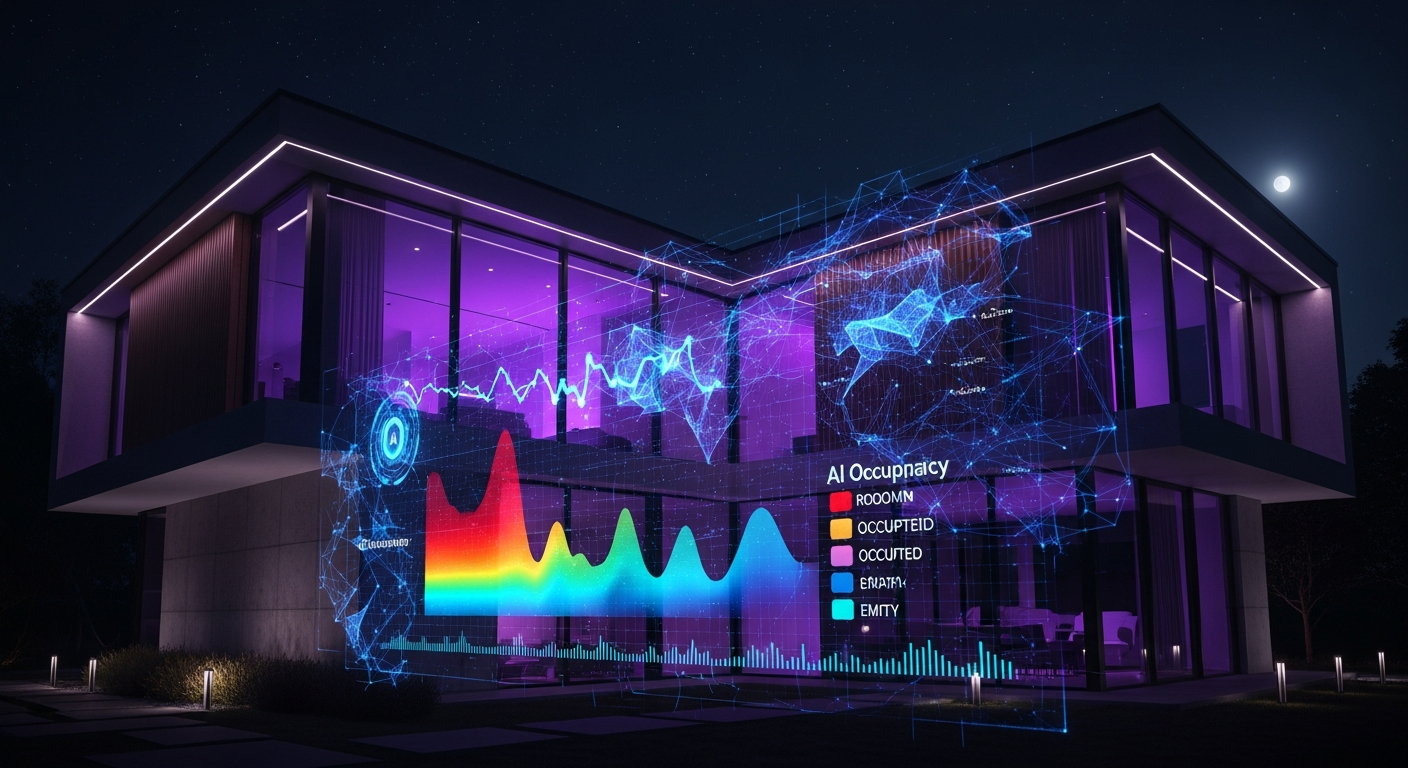
From Control To Understanding
The smart home revolution of the past decade gave us voice-activated lights, app-controlled thermostats and connected appliances. These are remarkable conveniences. But they share a fundamental limitation — they respond to you. They do not understand your home.
Home intelligence is the next step. It means applying artificial intelligence, sensor fusion and data analytics to create a property that genuinely understands how it is being used. A home that can answer questions like:
- Which rooms are occupied right now?
- How is my home used differently on weekdays versus weekends?
- Which spaces go unused for days at a time?
- When does my household typically wake up, move between rooms and settle for the evening?
These are not questions a smart speaker or connected lightbulb can answer. They require a fundamentally different approach.
The Three Pillars Of Home Intelligence
1. Spatial Awareness
Before a home can be intelligent, it must know what it is. This begins with a precise 3D map — typically created through LiDAR scanning — that captures the geometry of every room, the position of every wall, door and window, and the layout of furniture and fixtures.
This spatial model is the foundation on which all intelligence is built.
2. Occupancy Intelligence
With a spatial model in place, AI can interpret WiFi signal patterns to detect the presence and movement of people within the property. Unlike motion sensors, which cover narrow fields of view and miss a person sitting still, WiFi-based occupancy detection works through walls and responds to subtle changes in signal caused by breathing and micro-movements.
The result is room-level presence detection without cameras, microphones or wearable devices.
3. Behavioural Analytics
Individual data points become intelligence when they are accumulated over time and analysed for patterns. Home intelligence platforms track occupancy across days, weeks and months to reveal:
- Daily patterns — when is each room typically occupied throughout the day
- Space efficiency — which rooms are used frequently and which are largely empty
- Anomaly detection — deviations from established patterns that might indicate something worth investigating
- Trend analysis — how usage patterns change across seasons, life events or household changes
Home Intelligence vs Smart Home
| Capability | Smart Home | Home Intelligence |
|---|---|---|
| Device control | Yes | Yes |
| Voice commands | Yes | Optional |
| Real-time occupancy | No | Yes |
| Historical analytics | No | Yes |
| Camera-free presence detection | No | Yes |
| 3D property model | No | Yes |
| Behavioural insights | No | Yes |
Real-World Applications
For Families
Understanding which rooms your household actually uses — and which sit empty most of the day — helps you make better decisions about energy use, furniture investment and how you configure your home.
For Property Investors
Analytics revealing occupancy patterns across a rental portfolio help identify properties being used beyond their agreed terms or flag extended periods of vacancy.
For Architects And Designers
Before redesigning a space, understanding how it is actually used — rather than how clients assume it is used — produces better design outcomes. Home intelligence data provides that evidence base.
For People Who Care About Energy
Heating and cooling unoccupied rooms wastes significant energy. Occupancy intelligence enables truly demand-driven climate control — warming rooms before they are needed, cooling them only when they are occupied.
Privacy At The Core
The most significant distinction between home intelligence and traditional home monitoring is the approach to privacy. A camera-based system captures continuous footage of your home and its occupants. A home intelligence platform powered by WiFi sensing and LiDAR detects presence without ever recording an image.
No footage. No audio. No biometric data. Just the information you choose to share about how your spaces are used.
The Future Of Intelligent Living
As AI models become more sophisticated and sensor technology continues to improve, home intelligence will expand to encompass energy optimisation, predictive maintenance, integrated health insights and seamless collaboration with architects, estate agents and smart city infrastructure.
The intelligent home is not a luxury of the future. With the right platform, it is accessible today.
Frequently asked questions
What is home intelligence?
Home intelligence is the use of AI, sensor fusion and data analytics to help a property understand how it is being used. It goes beyond smart home control to provide occupancy insights, space analytics and behavioural patterns.
How is home intelligence different from a smart home?
A smart home lets you control devices remotely. A home intelligence platform analyses occupancy, movement patterns and space usage to give you genuine insight into how your property is used.
Does home intelligence require cameras?
No. SPECTRA's home intelligence platform uses WiFi signal analysis and LiDAR scanning — neither of which captures images or video — to detect occupancy and build property analytics.
What data does a home intelligence system collect?
SPECTRA collects WiFi signal measurements and LiDAR geometry data. It does not collect images, audio, or biometric information of any kind.
Who can benefit from home intelligence?
Homeowners, property investors, architects, interior designers, estate agents and facilities managers all benefit from the occupancy insights and space analytics that home intelligence provides.