
SPECTRA Blog / Digital Twin
What Is A Home Digital Twin?
A home digital twin is a living, breathing virtual replica of your property. Find out how this technology is transforming the way we understand and interact with our homes.
Introduction
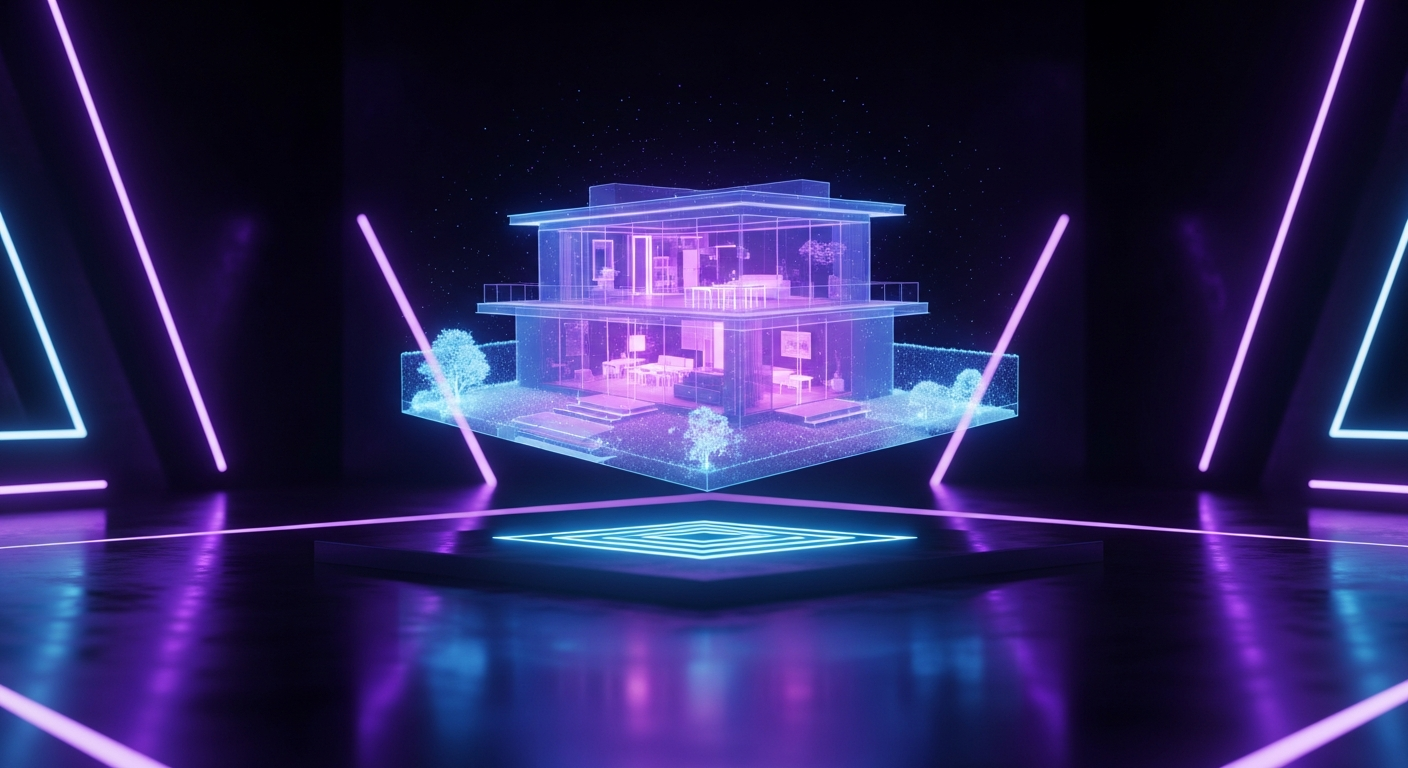
A home digital twin is a precise, real-time virtual replica of your physical property. Powered by artificial intelligence, LiDAR mapping and occupancy sensors, it mirrors your home in three dimensions — capturing not just the layout of rooms but how those spaces are actually used throughout the day.
The concept of digital twins originated in aerospace and manufacturing, where engineers used virtual models to monitor and simulate complex systems. Today, the same principles are being applied to residential and commercial properties, giving homeowners, architects and property managers an entirely new way to interact with the spaces they own.
How Does A Home Digital Twin Work?
A digital twin is created through a combination of data collection and AI modelling:
Step 1 — LiDAR Scanning
LiDAR (Light Detection and Ranging) emits laser pulses that bounce off surfaces and return precise distance measurements. Modern iPhone models include a built-in LiDAR sensor, making it possible to create a centimetre-accurate 3D model of your home simply by walking through each room.
Step 2 — WiFi Sensing
WiFi signals travel through walls. When a person moves through a building, they disturb the wireless signal in a detectable pattern. AI algorithms trained on millions of movement samples can interpret these disturbances to detect occupancy — no cameras required.
Step 3 — AI Fusion
Combining the structural model from LiDAR with the real-time occupancy signals from WiFi produces a complete digital twin: a 3D map of your property that shows not just what your home looks like, but who is in it and where.
What Can You Do With A Home Digital Twin?
A digital twin is far more than a static floorplan. It becomes a live intelligence layer for your property:
- Occupancy monitoring — see which rooms are occupied right now, without cameras
- Space utilisation analytics — understand which rooms are used most and least across weeks and months
- Historical activity — review movement patterns and identify trends in how your home is used
- Property visualisation — share accurate 3D models with estate agents, architects or building managers
- Smart home integration — trigger automations based on real occupancy rather than motion sensors with blind spots
Why Is This Different From A Smart Home?
A traditional smart home gives you control — you can adjust lighting, temperature and music with your phone or voice. A digital twin gives you understanding. It answers questions your existing smart devices cannot:
| Feature | Smart Home | Digital Twin |
|---|---|---|
| Adjusts devices | Yes | Yes |
| Cameras required | Often | Never |
| Room-by-room presence | No | Yes |
| Historical space analytics | No | Yes |
| 3D property model | No | Yes |
| Privacy-first design | Varies | Always |
Who Benefits From A Home Digital Twin?
Homeowners gain a detailed understanding of how their property is actually used, helping them make better decisions about renovations, energy use and space planning.
Estate agents can share accurate, interactive 3D models of properties with prospective buyers before they set foot inside.
Architects can use existing home data to inform design decisions — understanding how spaces flow and how rooms are actually used in everyday life.
Property managers can monitor occupancy across multiple units, identify inefficiencies and make data-driven decisions about space allocation.
Facilities managers can track how commercial spaces are used across the working day, improving efficiency and reducing wasted resources.
Privacy And Security
One of the most common concerns about any home intelligence technology is privacy. A home digital twin built on WiFi sensing and LiDAR mapping does not require cameras or microphones. All occupancy data is processed on-device or in a secure cloud environment, and no personal image or audio data is ever collected.
The result is genuine home intelligence without the surveillance trade-off.
Getting Started With A Home Digital Twin
Creating a home digital twin with SPECTRA takes minutes:
1. Download the SPECTRA app on your iPhone
2. Walk through each room to complete a LiDAR scan
3. Connect your existing WiFi router — no new hardware required
4. Your digital twin begins building immediately
Within hours, SPECTRA will show you a live 3D model of your home, real-time occupancy data and the beginning of your property analytics history.
Frequently asked questions
What is a home digital twin?
A home digital twin is a real-time virtual replica of your physical property, created using LiDAR scanning and AI. It mirrors your home in 3D and shows how the space is being used.
Do I need any special hardware to create a digital twin?
No. SPECTRA uses the built-in LiDAR sensor on your iPhone and your existing WiFi router. No cameras, extra sensors or professional installation is required.
How accurate is a LiDAR home scan?
iPhone LiDAR is accurate to within a few centimetres in typical home conditions, making it precise enough for detailed floorplans and space analytics.
Is a digital twin the same as a smart home?
No. A smart home lets you control devices. A digital twin gives you deep understanding of how your property is used — occupancy, movement history and space analytics — without requiring camera surveillance.
Is my home data private?
Yes. SPECTRA does not use cameras or microphones. Occupancy detection is based on WiFi signal analysis and LiDAR geometry — no personal images or audio are ever captured.